07 Jul 2026
Mike Trace, CEO of The Forward Trust, provides an insightful Executive Summary for latest report, Addiction in the UK.
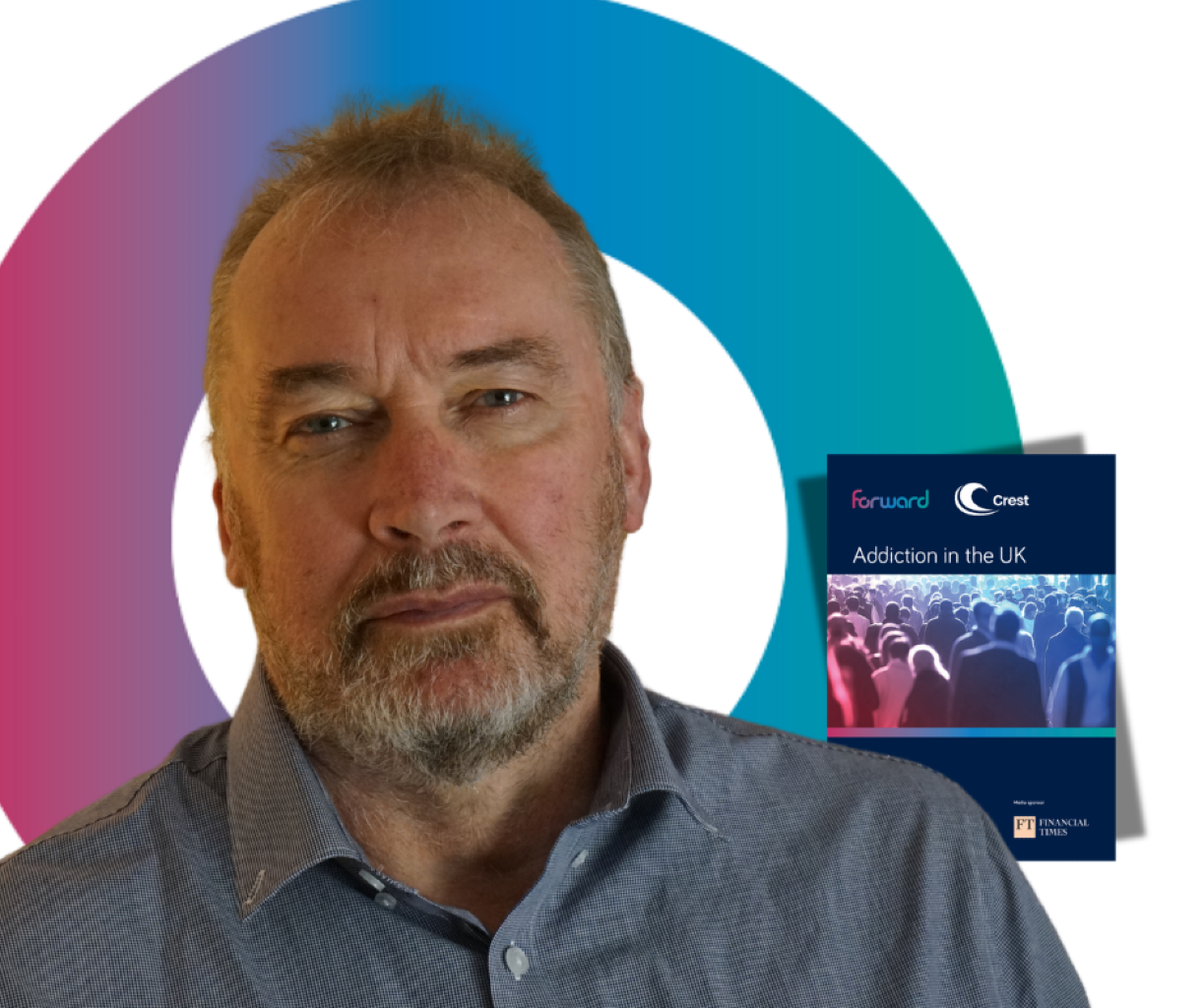
The Forward Trust and Crest Advisory have worked together to identify and analyse key evidence and draw together findings which reflect addiction in the UK. Our analysts have assembled research data, pored through government reports, and conducted further analysis, to bring you this publication.
Read the full report 'Addiction in the UK'
This report is the first in a series looking at how addiction affects families and communities in the United Kingdom. This report focuses only on alcohol and illegal drugs but the hope is that future reports will include behaviours such as gambling.
Prevalence estimates
Although well-established as an internationally accepted mental health condition, there is still much debate over the terminology, and definition, of addiction. Partly because of this diversity of definition, there is no precise data on the number of UK citizens currently struggling with addiction, or who are in recovery from addiction. But we have assembled the following best estimates from surveys and official reports:
750,000 - Estimated number of UK citizens addicted to alcohol
400, 000 - Estimated number of UK citizens addicted to illegal drugs
275,000 - Estimated number of UK citizens addicted to gambling
700,000 - Estimated number of UK citizens in recovery from addiction (around)
Use of alcohol is widespread and culturally embedded in UK society – nearly half of adults drink at least weekly, and almost a fifth drink above the NHS safe guidelines (Drinkaware, 2025). Use of illegal drugs, while less prevalent, is still widespread – with 8.7% reporting use in the last year (likely to be an underestimate due to survey methodology). (ONS, 2025a).
Meanwhile, the Office for Health Improvement and Disparities (OHID) estimate that around 24.5 million people in the UK gambled in 2018 and 0.5% of the population could be experiencing problem gambling (OHID, 2023).
In terms of international comparisons, the UK has a higher overall consumption of alcohol than most other comparable countries but is not a significant outlier. For illegal drug use, the UK has a prevalence rate of 8.7% (use in the last year), compared with a global average of 6% (ONS, 2025a, UNODC, 2025).
Most people who use alcohol or drugs, or engage in gambling, do not do so in a compulsive or addictive way, but a significant minority do progress to addictive and harmful behaviour. Opinion polls conducted on behalf of The Forward Trust for Addiction Awareness Weeks in 2024 and 2025 showed a surprising but consistent result – over 10% of a representative sample of all adults claimed to be currently or previously struggling with an addiction – that would equate to around 5.5 million people across the whole population.
Harms linked to addiction
Alcohol and drug related deaths are rising to their highest level on record – with 10,000 UK citizens dying of alcohol related causes (ONS, 2025b), and around 7,000 dying of drug related causes, in the last year for which figures are available (ONS, 2025c, NRS, 2025, NISRA, 2026). These are premature and preventable deaths that should receive more attention in public health strategies.
Harms linked to addiction are widespread:
Over 50% of people defined as homeless report the use of illegal drugs. And over 50% report alcohol addiction. Drug and alcohol problems are both a cause and effect of homelessness (ACMD, 2019).
Around 40% of all those people entering treatment for drug or alcohol addiction had committed crimes related to their addiction, and one study has shown that 60% of men in treatment had been perpetrators of domestic violence at some point (Hayhurst et al, 2013, O’Farrell et al, 2004).
Although the definition of ‘drug related homicide’ is very broad, police figures show that, in 2021/22, around half of all homicides (360 in total) met that definition (NAO, 2023).
Between 50% and 60% of people in treatment (figures vary from different parts of the UK) are unemployed or on long term sickness benefits (OHID, 2025b, Public Health Scotland, 2026), Northern Ireland Department of Health, 2025).
Somewhere between 250,000 and 400,000 children in the UK are living with a parent who is struggling with a drug addiction (ACMD, 2003).
There are costs linked to the harms caused by addiction. For example, alcohol addiction is estimated to cost the UK taxpayer £21 billion per year, while illegal drug addiction is estimated to cost £20 billion per year. There is clearly a significant fiscal benefit to preventing or treating these problems (Home Office, 2020, PHE, 2016).
Addressing addiction
The report traces the recent history of policy responses to concerns around addiction in the four countries of the UK – the contents of national strategies, the funding provided and how it has been spent, and the experience of what works, what doesn’t work, and what is promising.
The report also discusses some of the progress achieved - and challenges remaining - in tackling addiction, and supporting the individuals, families and communities involved. While it is clear that rates of addiction in society remain high, the UK has much better professional and peer support systems to protect the health of people with addiction and help them move towards recovery.
Each country of the UK has a national strategy that aims to limit the health, crime and social harm of alcohol and drug markets. Supply reduction and prevention efforts – very different for alcohol, or for illegal drugs - have yet to have a significant impact. But there are promising signs of reductions in overall users, and volume of use, amongst younger people.
Areas for action
Our report concludes by suggesting some areas of activity for government departments, local authorities, and charities – that we think could reduce the impact of addiction, and better support those struggling with it. We encourage you to use this information, and these suggestions, to inform your own discussions around addiction.
Give renewed political leadership to the urgent challenge of reducing the number of drug and alcohol related deaths. The fact that, every year, around 17,000 citizens die early and preventable deaths, should be a national scandal that receives much more policy and strategic attention.
Maintain reliable funding for the drug and alcohol treatment and recovery services in every area of the country - so that anyone in need of help can get access to free and professional advice, practical support to stay alive and healthy, confidence and motivation to believe in change, and pathways and programme to break the cycle of addiction and find recovery.
Make it easier to get access to recovery programmes – in residential, non-residential or prison settings, for people living with addiction and their loved ones. Currently, access to this support is slow, opaque, and restricted by inefficient funding and assessment mechanisms. When people are motivated to accept help, they should be able to get into treatment and recovery quickly.
Strengthen strategies to reduce the impact of addiction on crime and anti-social behaviour. The mechanisms for identifying, motivating and treating addicted people in the criminal justice system have been hollowed out over the past 15 years, but can be quickly rebuilt with the right political and institutional commitment. The government’s anti- social behaviour mission, and the 2026 Sentencing Act, will not achieve their objectives without determined action to improve prison treatment and recovery, and community treatment alternatives.
Boost efforts to limit accessibility of cheap alcohol. Experiments with minimum unit pricing and higher taxation seem to be showing promising results, and these measures could be expanded as part of an explicit drive to reduce levels of binge or addicted patterns of drinking.
Learn lessons from the development of drug and alcohol policy and grasp the opportunity provided by the Gambling Levy. Starting in 2026, the government has the opportunity to build a new network of NHS, community and peer led services to tackle rising levels of gambling addiction. Over £100 million is being spent by government this year through a series of grant schemes, but the absence of a unified strategy behind these schemes runs the risk of undermining impact.
Target funding on programmes and interventions with greatest impact on priority outcomes– reducing deaths, reducing crime, and increasing recovery. Currently the system prioritises processes such as compliance with guidance, number and speed of assessments, numbers in treatment– rather than real outcomes. This skews priorities and takes attention and resources away from a focus on impact.
Increase public visibility of support for people struggling with addiction (and their families and loved ones), with a particular focus on showcasing stories of people who have successfully confronted and overcome their addiction, and signposting people to mutual aid and peer support such as that offered by the 12-step fellowships, SMART recovery, and local lived experience recovery organisations (LEROs).
Tackle the shame and stigma that prevent people from seeking help by increasing public awareness of the nature and causes of addiction, and the possibilities and benefits of recovery. Forward’s ‘Taking Action on Addiction’ campaign encourages openness about addiction and challenges society to replace stigma with understanding.
The mechanisms for identifying, motivating and treating addicted people in the criminal justice system have been hollowed out over the past 15 years, but can be quickly rebuilt with the right political and institutional commitment.