13 Jul 2026
Our Leading Forward series has released a new podcast episode, 'Addiction in the UK - new landmark report highlights the UK's drug and alcohol crisis'.
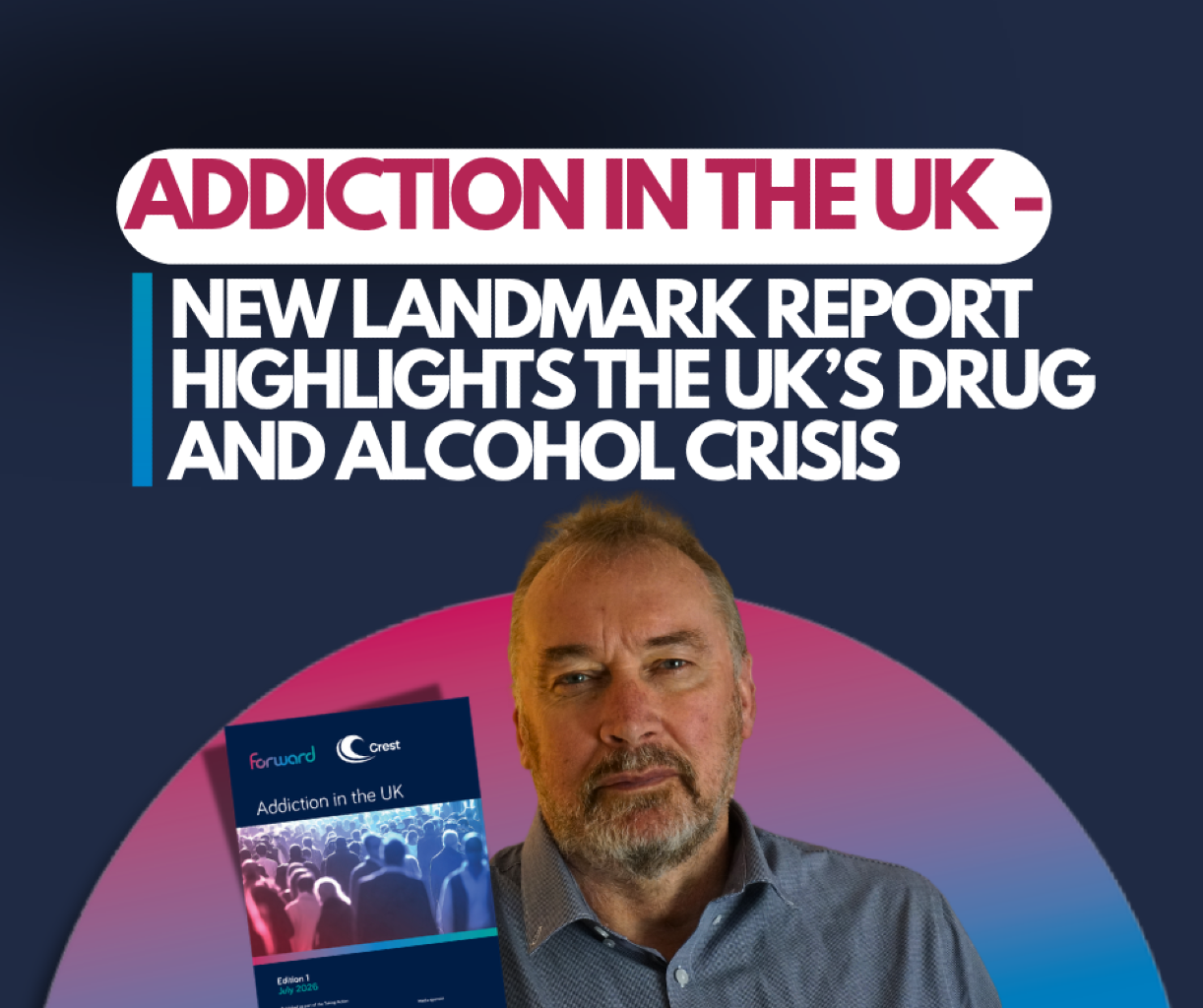
In this episode, The Forward Trust's CEO, Mike Trace, discusses the compelling findings from our new landmark report, 'Addiction in the UK'.
Addiction in the UK - by The Forward Trust and Crest Advisory - Full Report
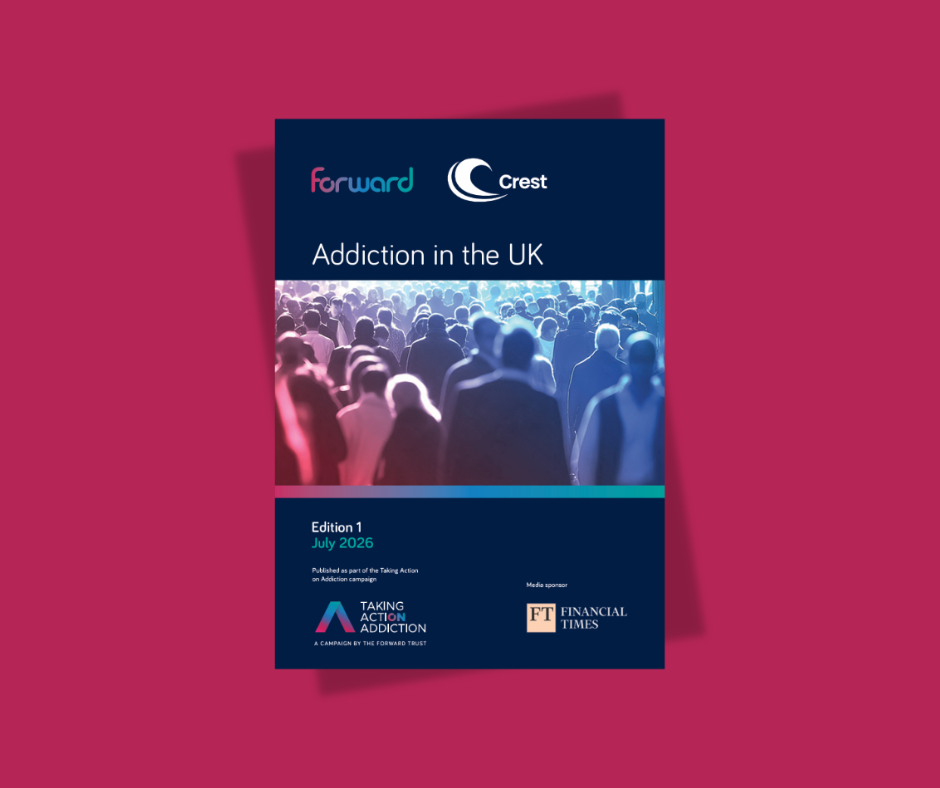
On behalf of Taking Action on Addiction - a Forward Trust campaign - this comprehensive new report (co-authored by Crest Advisory) explores the myriad reasons behind rising alcohol and drug-related deaths across the UK.
With addiction now seemingly a public health crisis, deaths of despair due to drugs and alcohol have a devastating impact on families, communities and public services.
In this special edition of the podcast, Mike's analysis draws on robust evidence-based data to explain how the challenges have occurred, but also makes sound recommendations for improvements based on his 40+ years of working in the sector. You can read Mike's Executive Summary from 'Addiction in the UK', which includes a direct link to the full report.
Listen on Soundcloud:
Listen on Spotify
Disclaimer: This is an edited transcript of the episode, prepared for accessibility and readability. The meaning and content are unchanged.
Mike Trace, Chief Executive, The Forward Trust
Hello everybody, and welcome to the latest edition of Leading Forward. My name is Mike Trace. I'm the Chief Executive of Forward, hence the title, and this is the podcast or vlog that allows me to ramble on for a while about issues affecting The Forward Trust and the work that we do.
This edition focuses on a publication that The Forward Trust commissioned and is publishing in early July. The publication is called Addiction in the UK.
We commissioned this report because we noticed that there is no single publication that draws together all the data, research, analysis and discussion around addiction in the UK. Information exists across many different sources, and we're modelling this report on the Bromley Briefings produced by the Prison Reform Trust, which bring together key information relating to prisons and the criminal justice system.
We're hoping this becomes the first in a series of annual publications that bring together everything currently known about addiction in the UK and how it affects individuals and society.
This first edition has been produced in collaboration with Crest Advisory, a highly respected consultancy and think tank working across the social and criminal justice sectors. The report is available free online on The Forward Trust website.
I want to highlight a few of the key issues covered in the report. However, I won't be able to do a 90-page publication justice in a short podcast, so I encourage you to read the full document.
What is addiction?
The first question we address is: what is addiction?
Perhaps surprisingly, this is a more controversial subject than many people realise. We all use the word "addiction" and talk about it regularly, but the academic, scientific and public understanding of the term remains under debate.
In some circles, the term itself has become somewhat unfashionable. There are challenges to the idea that addiction is a disease, questions about whether it should be considered a medical condition, and debates about whether it merits a medical description at all.
Increasingly, the term substance use disorder is being used around the world. There is value in that phrase because not everyone who has difficulties with drugs or alcohol is technically addicted. Some people engage in binge drinking or other risky patterns of behaviour that may not fit a strict definition of addiction.
Equally, it's important not to stigmatise all substance use. Not everyone who drinks alcohol, takes drugs, gambles or engages in other potentially risky behaviours is automatically addicted.
The term "disorder" is broader and, in some ways, helpful. However, for me, it still does not adequately capture the condition we commonly understand as addiction.
The definition used by the World Health Organization describes addiction as a biopsychosocial condition. I think this is a useful framework because it highlights three important elements.
First, there is a biological aspect. Brain chemistry and neurochemical responses to substances or behaviours can contribute to the development of addiction.
Second, there is a psychological aspect. People's emotional wellbeing and psychological health clearly influence their vulnerability to addictive behaviours.
Third, there is a social dimension. This is particularly relevant to The Forward Trust. Addictive behaviours are more prevalent among people living harsher lives. Poverty, marginalisation, social exclusion and difficult living conditions can all increase the risk of addiction.
None of these three elements fully explains addiction on its own. However, together they provide a useful way of understanding how addiction develops and persists.
One of the best descriptions of addiction is the continuation of a repeated pathological behaviour, despite the fact that continuing that behaviour causes significant harm to the individual and those around them. The behaviour continues even though it is clearly against the person's best interests.
The debate about how much control an individual does or does not have over this behaviour is fascinating. However, I think it remains helpful to use the term addiction because it provides a framework for understanding what people are experiencing.
For many individuals struggling with addiction, simply recognising that what they are experiencing has a name and an explanation can be enormously empowering. It helps them understand what is happening and how they might find a pathway out of it.
I also think the term is useful for wider society. There are many phrases we can use—substance use disorders, gambling disorders, problem drinking, harmful drinking and so on—but addiction remains one of the most widely understood concepts.
Importantly, it is a term that can promote compassion. We want people to understand that addiction is something people struggle with and can recover from. We should avoid harmful labels such as "addict" or "junkie", but we should continue talking about addiction because it helps people understand both the problem and the possibility of recovery.
The extent of addiction in the UK
The report then looks at how widespread addiction is in the UK.
This is surprisingly difficult to quantify. There is no public register of people experiencing addiction. We rely on surveys, research estimates and treatment data.
Bringing together the best available evidence, we estimate that approximately 750,000 people in the UK are currently addicted to alcohol.
We estimate that around 400,000 people are addicted to drugs. However, this figure is likely to be a significant underestimate because it is largely derived from treatment data focused on people using substances such as opiates and cocaine. It does not fully account for people addicted to prescribed medications, cannabis or other substances.
For gambling, the current estimate is approximately 275,000 people experiencing gambling addiction. Again, this may well be an underestimate. Research into gambling harms is still developing, and our understanding is likely to improve in the coming years.
Taken together, these figures suggest that around 3% of the UK's adult population is currently struggling with addiction.
That's more than one million adults whose primary challenge in life is battling an addiction.
We should stress again that these estimates probably understate the true scale of the issue.
The Forward Trust has also conducted public polling over the last two years. When we ask people whether they have ever struggled with addiction, more than 10% say yes. That equates to around 5.5 million people across the UK.
That figure may be somewhat overstated, as it relies on self-reporting and includes experiences across people's entire lives. Nevertheless, the consistency of the results over multiple years suggests that addiction affects a very significant proportion of the population.
The precise numbers are open to debate, but one thing is clear: addiction is a major social and public health challenge affecting millions of people.
Addiction and wider social problems
Addiction is not an isolated issue. It both contributes to and is influenced by a range of broader social challenges.
The most obvious example is mortality. The death rates among people affected by drug and alcohol addiction are dramatically higher than those of the general population. Many die decades earlier than expected. Life expectancy in the UK is around 80 years. Yet many people who die from drug overdoses or alcohol-related causes die between the ages of 40 and 50.
Many tragic cases involve people dying even younger. One particularly concerning statistic is the heightened risk of overdose among people recently released from prison. The average age of individuals who die from overdose following release is just 34.
Overall, approximately 17,000 people die every year from drug- and alcohol-related causes. To put that into context, this is roughly ten times the number of people killed in road traffic accidents each year in the UK. I remain frustrated that this public health emergency does not receive greater political attention.
There is also a significant relationship between addiction and crime. Of the approximately 320,000 people currently receiving treatment in the UK, around 40% report involvement in criminal activity. Often, this is linked to the need to finance an addiction. People may commit theft, fraud or other offences to obtain money for substances or gambling.
The connection between addiction and homelessness, unemployment and family breakdown is similarly strong. The relationship works in both directions. Addiction can contribute to homelessness and unemployment, but homelessness and unemployment can also increase the risk of addiction.
In my experience working with homeless populations, I've met people who became homeless for reasons entirely unrelated to drugs or alcohol, but who later turned to substances as a way of coping with the harsh realities of life on the streets.
The relationships are complex, but the links are undeniable. Finally, we must consider the impact on children. When more than a million adults are experiencing addiction, there will inevitably be effects on families. It's important not to assume that every parent experiencing addiction poses a safeguarding risk or should lose custody of their children. That simply isn't true.
However, we do need to recognise the harm that addiction can cause within families, particularly through the transmission of trauma across generations. Breaking those cycles of trauma is a critical priority.
How the UK responds to addiction
The report also explores how society responds to addiction. One thing that surprised me is how recent many of our current approaches actually are.
Addiction has been documented in Britain for centuries, yet comprehensive treatment responses only emerged relatively recently. Britain has a proud history of innovation in this area. A particularly significant milestone was the Rolleston Report of the 1920s, which effectively laid the foundations for what we now call opioid substitution treatment.
The idea that doctors could prescribe safer substitute medications rather than forcing people to seek illicit drugs was pioneering at the time. Britain was also an early adopter of therapeutic communities, residential rehabilitation programmes and the 12-step movement. Despite this, formal national drug and alcohol strategies only really began emerging in the 1980s and 1990s.
One surprising fact is that a national alcohol treatment and harm reduction strategy did not exist until 2004. Today, we're accustomed to government drug and alcohol strategies, but these frameworks are relatively new.
The treatment system today
One of the most important points in the report is that the UK remains one of the few countries in the world with a nationally funded treatment system.
It isn't perfect. I spend plenty of time criticising aspects of it. However, we do have a taxpayer-funded system available across the country, offering a range of support services.
Over the last 30 years, governments have consistently invested in support for people affected by drug and alcohol problems. The period from the late 1990s through the 2000s was particularly significant. Addiction became a major political priority, leading to substantial investment, innovation and development within treatment services. Unfortunately, the years following 2010 had a major impact on the sector. Funding reductions weakened many services and reduced opportunities for innovation and development. Much of the progress built over previous decades stalled.
The sector is now trying to rebuild
While new resources have been introduced, demand continues to grow. Patterns of drug use are changing rapidly, and services face increasingly complex needs.
Residential rehabilitation services were particularly hard hit. The sector effectively halved in size during the austerity years, and even maintaining the remaining capacity remains a challenge.
We are not currently in a position of comfortable expansion.
Nevertheless, it is important to remember that government still allocates around £1 billion per year to addressing drug and alcohol problems in the UK.
Looking ahead
This has been a very quick overview of the report and its key themes: what addiction is, how prevalent it is, how it interacts with wider social challenges, the history of treatment and the challenges that lie ahead.
We're extremely pleased to have published this first edition, and we're already starting to think about next year's report.
We want to refine the data, strengthen the analysis and take a closer look at gambling addiction, which remains a rapidly evolving and not yet fully understood issue.
The central message of the report is simple
Addiction is a well-established mental health condition within our society. There is no sign that rates of addiction are falling, and there are no miracle cures on the horizon.
As a result, the sector and government must continue focusing on the most effective ways to help people stay alive, stay well and achieve recovery. That's what The Forward Trust will continue to do.
We'll continue producing these reports, and I hope you find this one useful.